A Line in the Sand
On drifting, building, and coming back to myself.
Lately, I’ve been thinking about how I ended up where I am right now. And I wanted to write some of these thoughts down as neatly as I can, before they disappear again.
As time passes, I’ve started to feel something quietly terrifying. The fundamentals of my core skills are fading. Sometimes I feel like I’m becoming a stranger to myself, slowly sliding into the hands of impostor syndrome. I try to be as objective as I can, to trace the reasons like clues and connect them to other parts of my life. But when I do this thinking in my spare time, the thoughts vanish easily.
I talk to myself a lot, sometimes even out loud, and somehow the key points, especially the painful ones, just evaporate. Maybe because those parts hurt too much. Maybe my brain is protecting me by forgetting the moment I say them plainly, even to myself.
So here I am: writing while I’m thinking, trying to pin my history to the page. Trying to understand how I became this unbearable man, from a naive kid who loved to tinker and build things with his own hands.
Back in the 90s, when I was a little boy playing on my knock-off Atari (Micro Genius), I was obsessed with one question: How does this thing work? It felt like magic. And I didn’t just want to play with gadgets. I wanted to become the person who made them.

I’ve never been a “people person.” Not even as a kid. But I loved machines. I didn’t need a crowd. I had my Atari and my Aiwa Walkman, and honestly, I was at peace. I could spend hours drawing Pokémon and coloring them in. I loved building LEGO, K’NEX, and cardboard houses. I was the kind of kid who wanted to construct something, not chase a ball down the street like everyone else.
God, I miss those days.
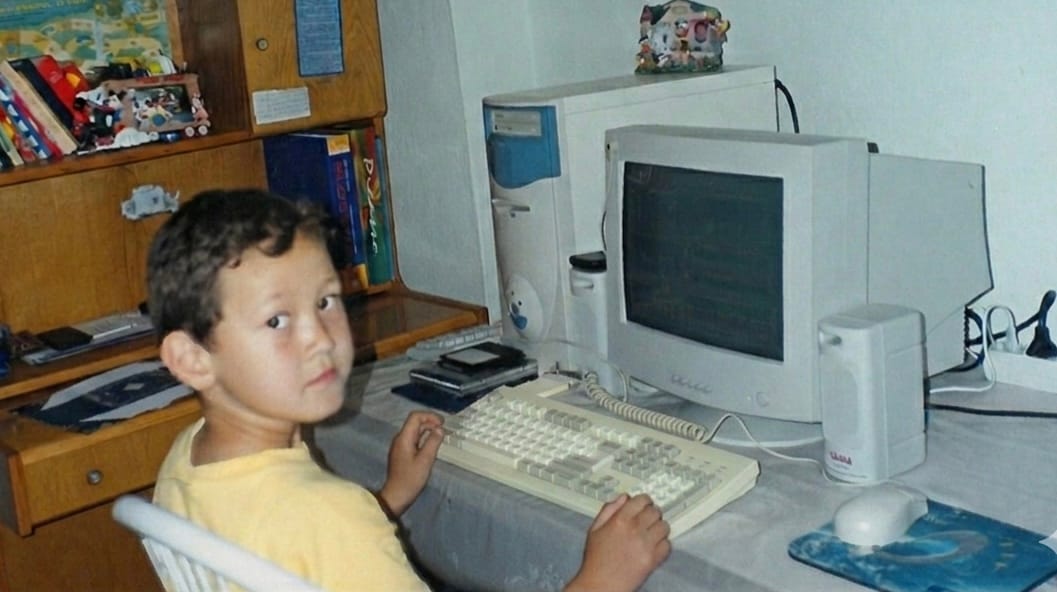
When I was still in elementary school, my uncles and relatives introduced me to computers. I begged my father for one, and eventually he gave in.
It was an Intel Celeron 400 MHz, 64 MB RAM, a 4 GB hard drive, and Windows 98. Pretty good for those years. It even had a TV tuner card, one I used to “experiment” with local encrypted broadcasts (hello, Cine5).
The first time I booted it up, something in my life shifted permanently. I was in shock. The possibilities felt endless.
I started poking around the pre-installed apps immediately. I remember drawing stupid little things in Paint for days without turning the computer off, because I didn’t even know what “Save” meant yet. And of course, I messed with system files and crashed Windows within the first week.
Luckily, I had relatives and neighbors who could “format” the PC and reinstall everything from scratch. Back then, they were my heroes. I admired them. I wanted to be like them when I grew up.
And somehow, I was also one of the few kids who had dial-up internet at that age. I was still in elementary school. While other kids were outside playing with balls made from newspaper or bottle caps taped together, building goal posts out of rocks, I was at home wrestling with an RJ-11 connector.
I learned the hard way that the internet dies the moment your mom picks up the phone.
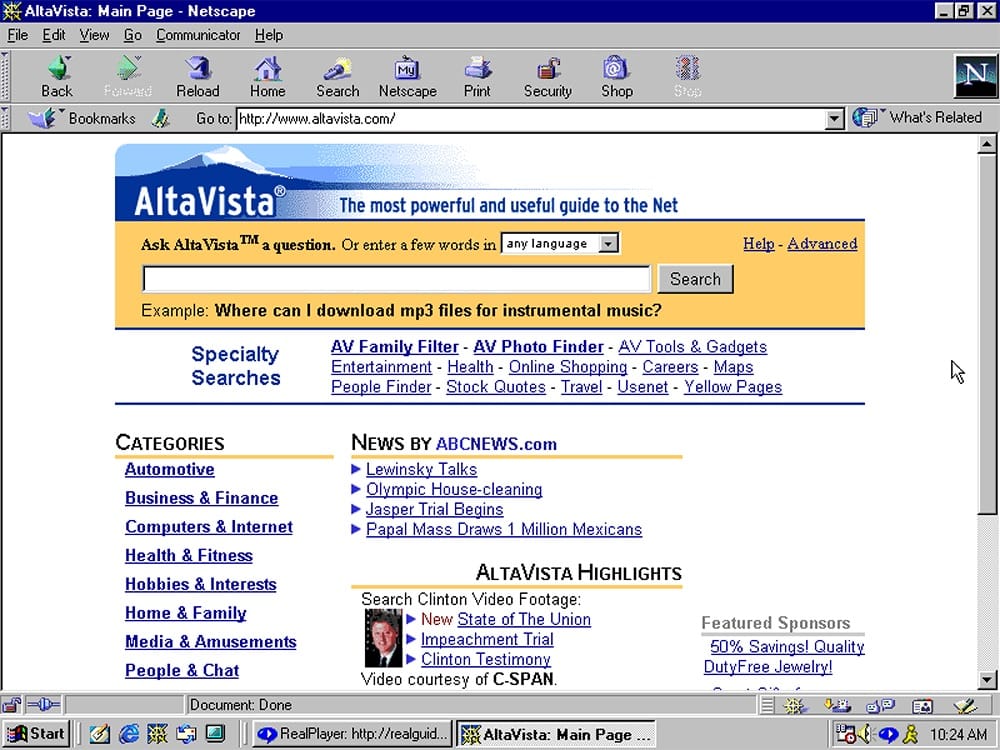
Google didn’t exist yet. Yahoo and AltaVista were thriving (or was it Astalavista? I still mix them up). I knew the difference between LAN and WAN when I was nine. I knew what happens if you pull the CMOS battery from the motherboard. I knew what happens if you disconnect the IDE cable while the hard drive is still running. Phew.
I could list hundreds of incidents like that, but the important part is this: my friends didn’t even know these things existed. I had no one around me to share these experiences with. That created a misalignment between what they loved and what I loved.
And honestly, now I realize that destiny still follows me. Even today, I often feel disconnected from the people around me.
When I was 12 or 13 (2002/2003), I started learning web programming with FrontPage and Dreamweaver. I taught myself HTML and CSS. Like everyone else back then, I tried to learn Flash too. I also attempted Visual Basic from a book my uncle gave me, and it completely destroyed my brain.
Compiler errors, build environments, Windows Forms. It was too heavy for my age. But HTML was immediate. You write something, press F5, and there it is. That feedback loop felt like oxygen.
And once I tasted that loop, I kept chasing it in different forms.
I also loved playing games, especially online ones. Around 2005 or 2006, I started hosting my own servers. Counter-Strike 1.6 servers. Knight Online private servers. Today it might sound like a small hobby, but back then it felt like engineering a tiny universe and inviting people into it.
Those were the days when technical knowledge was not handed to you. You had to hunt for it. You had to read half-broken forum posts, try things that did not work, break everything, then try again. Hacker culture was not a style. It was survival. If you wanted something, you built it. If you could not build it, you learned until you could.
I remember the modem interface like it was a place I used to live in. Late at night, the house quiet, everyone asleep, and me staring at a cheap web page full of menus. Port forwarding rules. IP settings. Firewall toggles. Apply. Reboot. Test. Fail. Repeat.
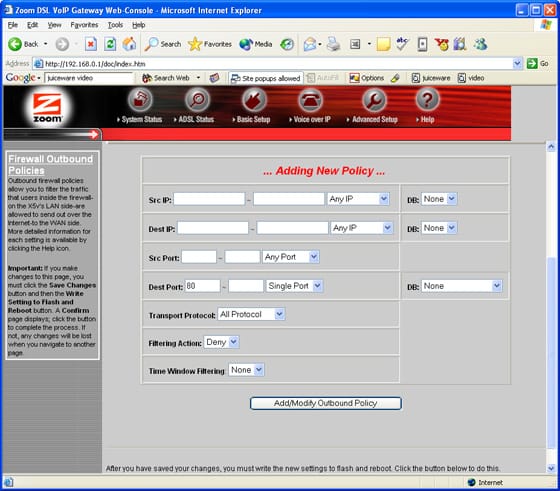
And then the classic mystery: why does my IP address keep changing? Why does it work one day and disappear the next like it never existed? I did not know the words yet, not fully. Dynamic IP. NAT. ISP behavior. But I could feel the shape of the problem. I could feel that the internet was not magic. It was pipes, gates, and rules. And if you spoke the wrong language to it, it simply refused to open.
It was not only hosting servers, either. I was also trying to play Age of Empires and Warcraft 3 with my friends over the internet, but as if we were all on the same local network. We fought with the same enemy again and again. Ports, forwarding, opening, closing, testing. Most of the time we failed. In the end we usually gave up and used Hamachi, and it felt like cheating the universe.
For voice chat we used Ventrilo. Skype was not a thing back then. Discord did not exist even as a concept. It is funny to remember now, but we were just kids trying to play games. And without realizing it, we were learning networking, troubleshooting, patience, and the habit of not quitting until the thing finally works.
By the time I started university, I already knew the fundamentals of programming. I already knew the joy of building digital things, and the mindset of tinkering until something clicks. But I was studying Electrical and Electronics Engineering, and our programming courses were mostly Assembly and C.
These were new to me, and after years of web programming I immediately disliked the nature of compiled languages. Waiting for builds, chasing compiler errors, staring at outputs in an ugly Windows command prompt. It felt cold compared to the browser. In the browser you press F5 and something happens instantly. In C, you argue with the toolchain first. You win only after you suffer a little.
Still, I adapted faster than almost everyone in the class. Conditionals, loops, recursion. Those ideas were already installed in my head from years of tinkering. So I learned the syntax quickly, and I could see that many others were struggling.
I still remember sitting in the computer lab and hearing people panic around me. Some of them did not even know how to open the IDE. Some did not know how to create a new project. Writing code was not even the problem yet. It was simply getting to the point where you are allowed to type.
I felt calm. Almost too calm. I would finish assignments while the instructor was still explaining the details, and then I would just sit there. Waiting. Listening to the panic. Watching the room. Feeling like I was in the same place but on a different frequency.
People started coming to me for help. They asked me to study with them. They asked me to check their assignments. I was useful. That felt good, but it also felt lonely in its own way. I was still not fully “one of them.” I was just the person who could get it done.
During those years, one small thing changed how I looked at software development. I bought a cheap, vaguely written book about WordPress. Back then it was becoming a popular blogging platform. You could set it up and start publishing immediately. But while reading that messy book, I discovered something that quietly shook my assumptions.
You could develop themes and plugins. You could extend a system that someone else built.
Until then, coding had always felt like something you do from the ground up. Frameworks and third-party libraries did not feel “clean” like they do today. They were harder to use, harder to understand, and often came with their own chaos. Because of that, I tried to build everything in pure PHP from scratch, without relying on anyone else’s code. Later, in the 2010s, PHP frameworks became a huge trend, but I stayed distant from that mindset for a long time.
WordPress cracked something open in me. For the first time, I tried to understand an ecosystem from the inside. The execution flow. The data flow. The extension points. I built a small theme and integrated it into my blog.
It broke a barrier in my mind about using libraries and contributing to someone else’s code while still layering my own taste and desires on top. It was not cheating. It was building with others, even if you never meet them. I still remember spending days just to make a single SQL query work. Days. Staring at errors like they were personal. And then finally seeing it work. The relief, the pride, the quiet victory. Those moments shaped me more than I realized.
University was also the time when I got my hands dirty with everything. Languages, tools, frameworks, and side projects mixed with electronics like one continuous playground. I used different Linux distributions as my daily OS. I built a Hackintosh and lived in it for months. I built a quadcopter. I wrote scrapers. I kept jumping between domains because curiosity kept pulling me forward.
Trying new tools and learning new languages kept me alive for years, right up until I started working professionally. And looking back, I realize computers and software were not just hobbies for me. They were my main thing for more than a decade, even before it was cool.
But after I graduated, things started to change.
First of all, I studied electronics. That naturally pushed me toward electronics-related internships. I tried to lean toward software as much as possible, so all my internships were pure software, but always close to the embedded world.
And as a result, my first job was embedded too. Then the next one. Then the next one after that.
Looking back now, it has been more than ten years.
Too many things have happened in my life. I did my MSc. I met my wife. I traveled a lot. I did my military service. Then COVID happened. Then came the mortgage, the loans, the responsibilities. Two cats. Two kids. Somewhere in that flood of life, I stopped poking my stable income source too much. I kept telling myself that stability matters, and it does. But especially recently, I have started to feel like the time has come for self-realization.
From the outside, I have always been the tech guy. The one who loves hacking, computers, internet things, whatever people call it. But for more than a decade, I have been working in air-gapped, legacy, process-heavy environments with almost zero autonomy.
Even my tech world changed shape.
I went from Linux, GNU tools, open-source, internet culture, building things freely, to Windows 10 Enterprise, vendor-locked tools, intranet-only realities, and processes that feel like they have not been updated in twenty years. I am still following the news. I still tinker with cloud stuff whenever I find time. I built a homelab rack and created my own little world at home. I still build web-related projects from time to time.
But none of that is relevant to my job. Not even slightly.
And that has depressed me more than I like to admit. It still does. More importantly, I still feel disconnected from the people around me. Because as much as I want to scream that this is not the real me, every aspect of my life keeps pointing at the same conclusion. This is just me.
And that bothers me deeply.
Because when I look back, I made most of the decisions after graduation that led me here. I am exactly where I worked to be for more than a decade. I did what I was supposed to do. I followed the path. I achieved the outcome.
And yet, I now realize that all those years of effort have been quietly clashing with my past.
I think the things I did before I started working professionally reflect me more. They mattered more, not because they were productive in the adult sense, but because they were chosen. They were mine. No serious purpose. No master plan. No money motivation. Just curiosity, just joy, just fun.
Those were the things that made me truly happy. Those were the things that made me feel like myself.
So I feel like the time has come to pull myself together and do something about it before it is too late. I do not want to wander around like a ghost anymore. And especially after having kids, I want to prove something to myself.
I want to prove that even with responsibilities, I can still chase my dreams without sacrificing my family. I want to be the kind of father who does not only provide stability, but also shows what it looks like to stay alive inside. I want my children to see a person who is tired sometimes, overwhelmed sometimes, but still honest. Still building. Still trying.
Maybe this is not a dramatic career pivot story. Maybe it is simply a return. A return to the part of me that gets excited by learning, by shipping something, by breaking things and fixing them again. A return to the kid staring at a screen at 2 a.m., refusing to go to sleep until the server shows up on the list.
I do not know exactly what the next step will look like yet. But I know what I do not want anymore. I do not want to live on autopilot. I do not want to wake up years later and realize I only chose safety, only chose comfort, only chose what was expected.
This post is a line in the sand.
I am not writing this to impress anyone. I am writing it to remember myself. And if I can remember, then I can rebuild.
Slowly. Carefully. Without breaking what matters most.
I want to prove to myself that I am worthy.
No spam, no sharing to third party. Only you and me.